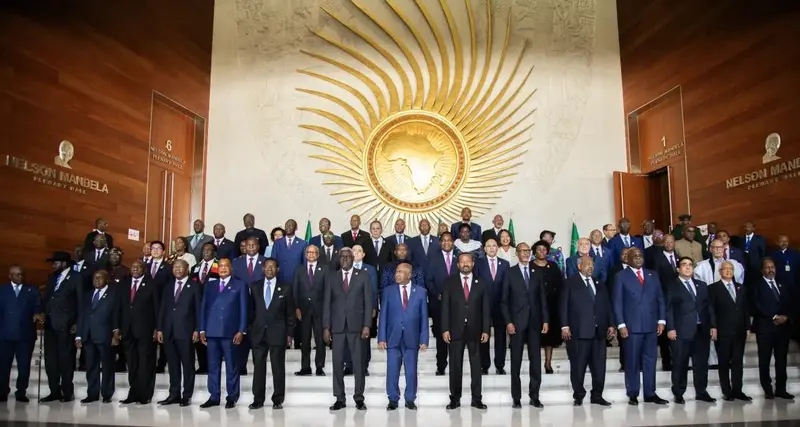
African presidents during an African Union summit. Photo Credits: African Union (AU)
Africa
Africa is expelling Western troops and pivoting to BRICS partners as a new generation of leaders challenges exploitation, coups and mineral extraction. Explore the continent's geopolitical shift and its bid for sovereignty.
Africa has grappled with deep structural imbalances for more than a century—spanning economic development, agriculture, education, innovation, technology, manufacturing, and political governance.
These issues represent only a portion of the broader challenges that have hindered the continent’s progress. Despite its vast natural resources and youthful population, Africa has often found itself constrained by historical injustices, external interference, and internal governance failures.
The Role of Western Powers in Africa’s Challenges
A recurring question in African political discourse is whether Western powers bear responsibility for many of the continent’s struggles. For decades, Western nations have been accused of advancing retrogressive, exploitative, and often opaque policies that conflict with African interests.
These policies that range from unfair trade agreements to political interference, have contributed to economic dependency, social fragmentation, and weakened institutions across the continent. While not the sole cause of Africa’s challenges, Western involvement has undeniably shaped many of the obstacles African nations face today.
These policies that range from unfair trade agreements to political interference, have contributed to economic dependency, social fragmentation, and weakened institutions across the continent. While not the sole cause of Africa’s challenges, Western involvement has undeniably shaped many of the obstacles African nations face today.
A Shift in African Geopolitics
In the past two years, Africa has undergone a noticeable geopolitical shift. The continent is increasingly asserting itself on the global stage, challenging long‑standing power dynamics and demanding a more equitable role in international affairs.
This shift is being driven largely by a new generation of bold, outspoken leaders who are unafraid to confront historical injustices and call out Western exploitation. Their assertiveness has sparked renewed discussions about sovereignty, self‑determination, and Africa’s place in global politics.
This shift is being driven largely by a new generation of bold, outspoken leaders who are unafraid to confront historical injustices and call out Western exploitation. Their assertiveness has sparked renewed discussions about sovereignty, self‑determination, and Africa’s place in global politics.
Expelling Foreign Troops: A Stand Against Exploitation?
One of the most symbolic expressions of this shift has been the expulsion of foreign troops. Leaders such as Colonel Assimi Goïta, Mali’s president, have removed French forces from their territories, arguing that foreign military presence has failed to deliver security and has instead facilitated exploitation.
Other nations including Burkina Faso, Chad, Mauritania, and Niger have followed suit by expelling U.S. forces. Critics argue that Western troops, often deployed under the banner of counterterrorism, have simultaneously enabled access to Africa’s mineral wealth.
Other nations including Burkina Faso, Chad, Mauritania, and Niger have followed suit by expelling U.S. forces. Critics argue that Western troops, often deployed under the banner of counterterrorism, have simultaneously enabled access to Africa’s mineral wealth.
Dubious Tactics and Mineral Exploitation
When direct access to resources is blocked, Western powers have been accused of resorting to covert tactics—such as supporting coups or backing leaders who align with their interests. These actions have deepened political instability and hindered Africa’s ability to build strong, independent institutions.
The Shift Toward Eastern Alliances
In response, many African nations are turning toward Eastern partners, where they feel more respected and secure. This realignment has strengthened the influence of BRICS across the continent, as citizens urge their governments to distance themselves from Western powers that have historically undermined African development.
Africa’s Potential to Lead
With a young, ambitious population and abundant natural resources, Africa has the potential to become a global leader in politics, economics, and innovation. With visionary leadership and strategic policies, the continent can reshape its narrative and claim its rightful place on the world stage.